TikTok · Brand & IPSports and IP partnership dashboard
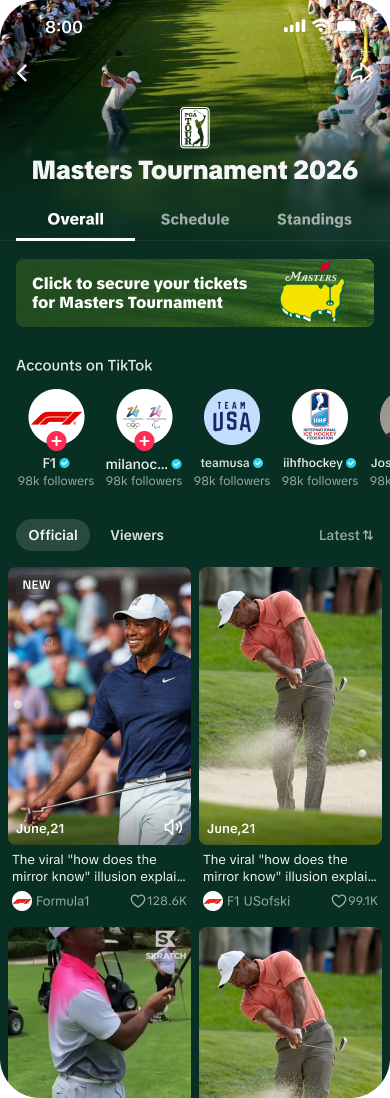
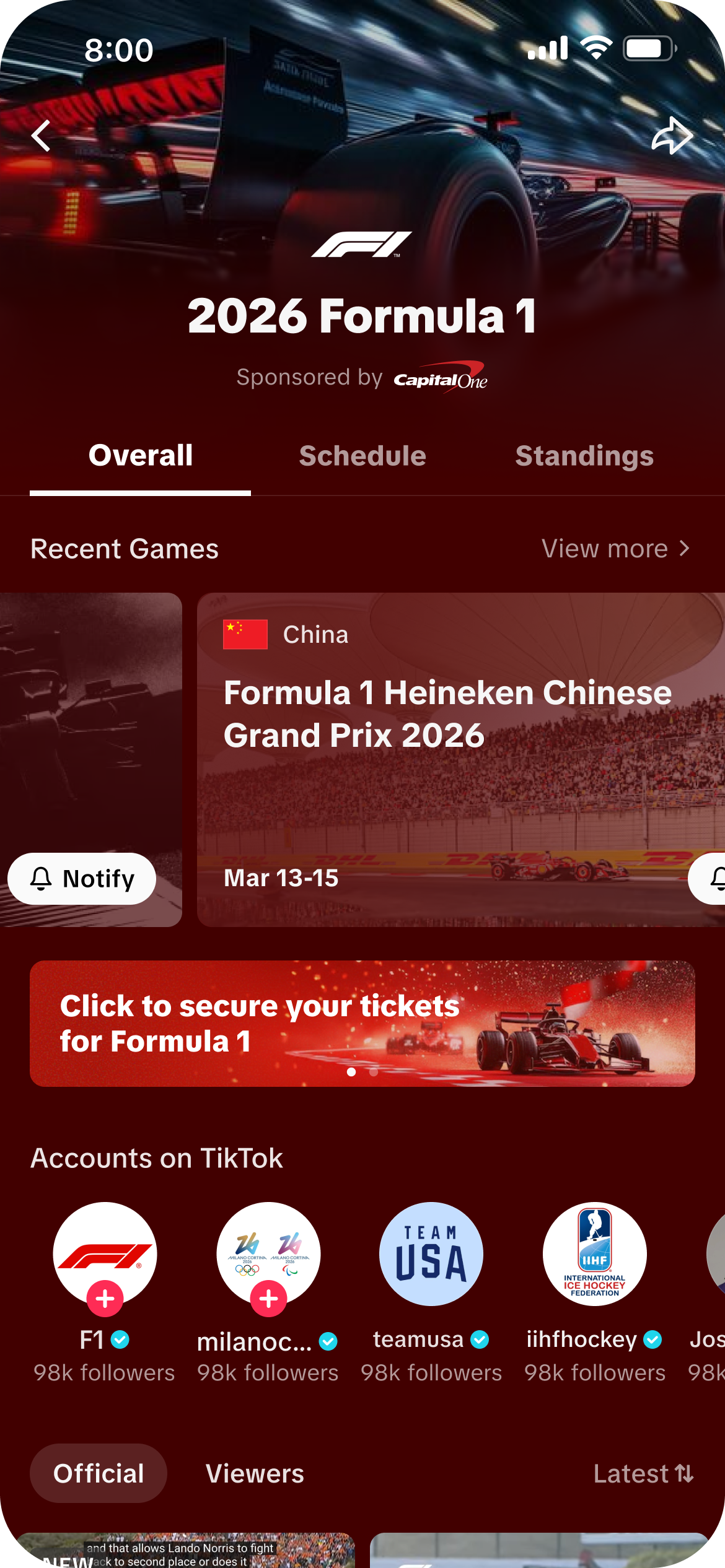
In-app destination hubs for licensed sports partners like Formula 1 and the Masters. One content system, multiple brands, each with its own voice, legal requirements, and fans who know the difference.
The challenge
One system, every brand’s voice
Partnership hubs have two owners with opinions: the partner, whose brand guidelines are contractual, and TikTok, whose voice keeps the app feeling like one product. The copy has to satisfy both while staying invisible to the fan who just wants scores, schedules, or clips.
And because this is a system, every label had to work everywhere. A tab name that's perfect for F1 has to also make sense for a golf major. Writing for one screen is craft; writing labels that survive every partner is architecture.
Phase 1: The framework
Same structure, different brand
F1 and the Masters share an identical structure: Overall, Schedule, Standings. Same tabs, same ticket banner, same "Accounts on TikTok" row, same content feed. What changes is everything the partner owns: imagery, color, sponsor placement. The words are the constant that makes fifty different brands feel like one product.
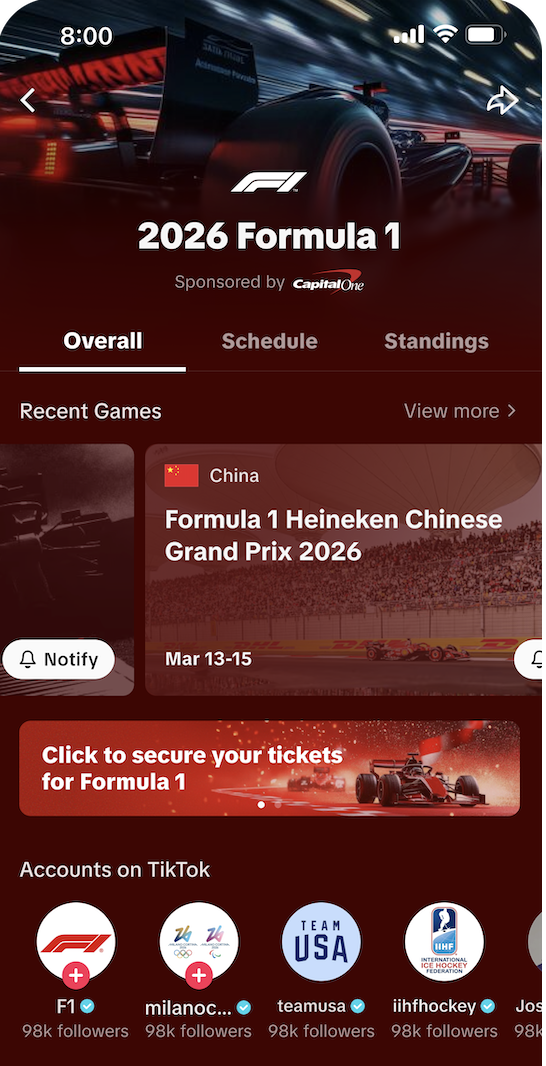
Formula 1 hub overall tab with recent games, ticket banner, and official TikTok accounts
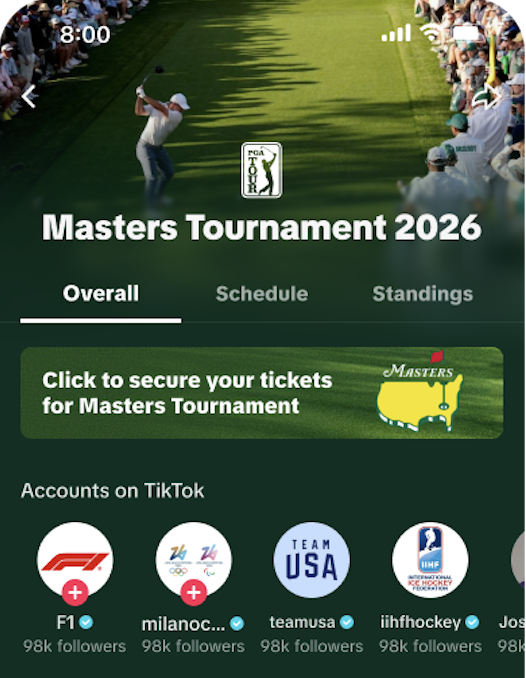
Masters Tournament hub overall tab with ticket banner, accounts, and official content feed
Overall · Schedule · Standings
Three labels generic enough for any sport, specific enough to need no explanation.
Phase 2: Time states
Before, during, and after in one word each
Every event exists in one of three time states, and each gets exactly one word: Notify before it starts, LIVE while it's happening, Rewatch after it ends. The same three labels carry a Melbourne practice session and a Sunday round at Augusta.
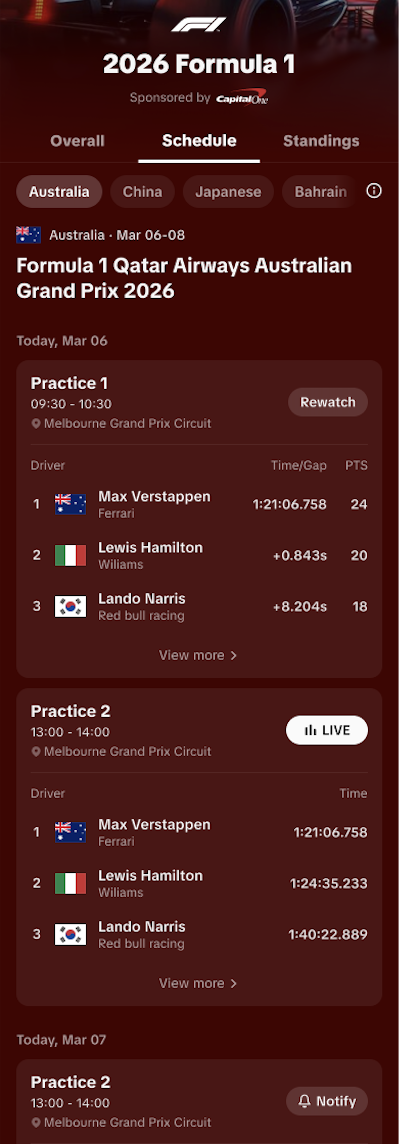
F1 schedule with practice sessions showing Rewatch, LIVE, and Notify states
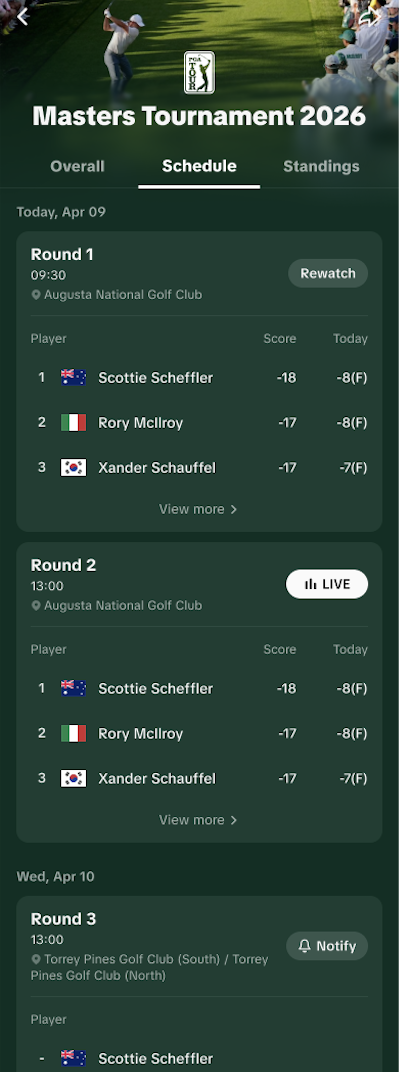
Masters schedule with rounds showing Rewatch, LIVE, and Notify states
Process
Writing for the system, negotiating for the brand
The label system came first: every tab, state, and CTA had to be tested against the hardest partner, not the easiest one. If a label only worked for F1, it wasn't a label, it was F1 copy. Partner requirements then got absorbed where the system allowed (sponsor lines, ticket CTAs, brand-approved naming) without forking the framework.
It helped that I'm genuinely a fan. I follow F1 and golf, so I knew the language fans actually use: that F1 has practice sessions and constructors while the Masters has rounds, and that getting those terms wrong is how a hub loses a fan's trust in one glance. Writing for a fandom you belong to is a shortcut to credibility; the copy sounds native because the writer is.
Takeaway
What the project proved
The best system copy is the copy nobody notices. An F1 fan and a Masters fan land on structurally identical pages and both feel like the page was built for them. That's the quiet win of label architecture: the words do the standardizing so the brands can do the differentiating.